How I stopped underpricing my cabinetry work
I stopped underpricing my work when I sat down with three finished jobs and worked out what I had actually earned an hour on each. I believed my rate was £35. The real number was £26. Everything that fixed it followed from measuring that gap and refusing to quote from instinct again.
How do you know if you are underpricing?
Take your last three finished jobs and use the real numbers, not the quoted ones. Price charged, materials actually bought, hours actually worked including the fitting days. Then one sum per job: price minus materials, divided by hours. That is what you earned an hour, and it does not lie.
Here is mine from the day I finally did it:
| Job | Price | Materials | Hours | Earned per hour |
|---|---|---|---|---|
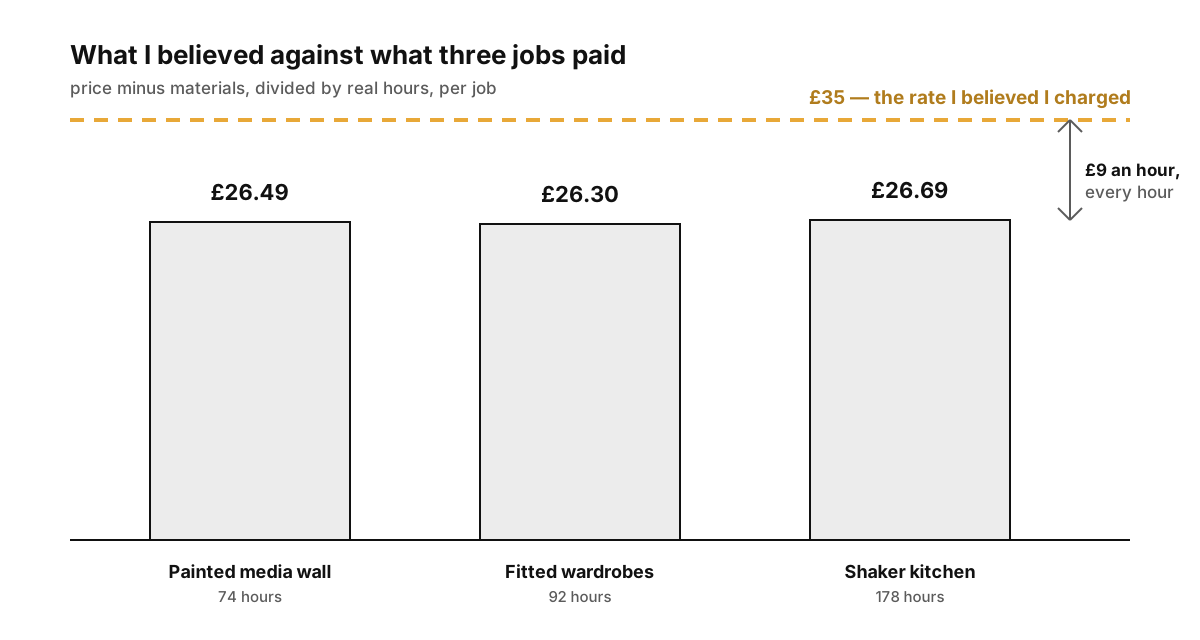
| Painted media wall | £3,200 | £1,240 | 74 | £26.49 |
| Fitted wardrobes | £4,100 | £1,680 | 92 | £26.30 |
| Shaker kitchen | £8,900 | £4,150 | 178 | £26.69 |
Three different jobs, one answer: £26 and change, against the £35 I would have told you my rate was. And that flatters me, because the sum ignores overheads entirely. Rent, power, insurance and the van all came out of that £26 before I saw a wage. I ran my own cabinetry workshop for over 10 years, and this table is from the middle of that run. It was not a beginner's mistake. It was a habit with years of practice behind it.
Why was I underpricing in the first place?
Three habits, none of which felt like mistakes at the time.
I absorbed price rises instead of passing them on. The price list in my head was always a year or two out of date. Birch ply I still thought of as £45 a sheet was £61 by the time the invoice arrived, and because the quote had already gone out, the difference came out of my margin. Then the next quote used the same stale number, because updating a dozen spreadsheet templates never reached the top of the pile.
I quoted hours for the job going perfectly. The media wall above went out as roughly 60 hours in my head. The recorded truth was 74, because real jobs contain sanding, second coats, a drawer that binds and a phone call in the middle of a glue-up. Quoting imagined hours instead of recorded ones shaved 15 to 20% off my labour on nearly every job.
I priced not to lose the job. Somewhere in every estimate I would picture the customer's face, guess the number they had in mind, and drift toward it. That is not pricing, it is mind reading, and I was only ever wrong in the one direction.
What actually fixed it?
Not a rate rise on its own. A higher number fed through the same habits just erodes again. Four changes stuck.
I wrote the method down and stopped negotiating with myself. Rate built up from overheads, a markup on materials, fitting as its own line. The whole method is in how to price cabinet jobs and it fits on a page.
I dated every material price. If a price had no date next to it, I treated it as wrong until I had checked it, and anything older than three months got re-checked before it touched a quote.
I recorded hours on every job, on a clipboard by the bench, and quoted the next similar job from those records instead of from optimism. Boring, and worth more than any single price rise.
I put my rates in one place. This is the part I eventually built a tool for, because it was the part spreadsheets fought me on. In ProCabinet you set your rates once, in a tab called My Rates, and every quote after that prices itself from them, so when ply goes up the change reaches the next quote instead of waiting for me to edit templates. Declared interest, it is my tool. Every account starts with a 14-day Pro trial, no card needed, and the free plan stays free after it.
There was a fifth leak I only measured later: material waste, sheets I had paid for and turned into unrecorded offcuts. I put numbers on that one in how to reduce plywood waste with nesting.
Did raising my prices lose me work?
Some, and that is the part nobody says plainly. The price shoppers went elsewhere, and the first few refusals stung. But more customers said yes than I had braced for, and the jobs won at the honest rate more than covered the ones that walked. The workshop stopped being full and skint at the same time, which is the condition underpricing hides behind.
The other change customers accepted without a blink was a 40% deposit paid by card before materials were ordered. Card fees are real money, and I have laid out exactly what they cost on the payment fees page, but an unpaid deposit costs more.
Common questions
What are the signs a cabinet maker is underpricing?
A full order book with nothing left in the account at the end of the month is the classic one. Others: dreading the material invoice on a job you quoted weeks ago, quietly hoping a customer will say no, and not knowing your effective hourly rate on the last job you finished. The three-job audit at the top of this post settles it in an evening.
Should I raise prices on jobs I have already quoted?
No. A quoted price is a promise, and breaking it costs more in reputation than the margin recovers. Raise from the next quote onward. If an old quote resurfaces months later, re-quote it openly against current material prices, and put a validity period on the new one.
What if I am always the cheapest quote?
Then your price is below what the customer was prepared to pay, every single time, and the difference is money you handed back without being asked. Being cheapest occasionally is normal. Being cheapest always means the market is quoting your work higher than you are, and the market is worth listening to on that point.
Try ProCabinet free. Every account starts with 14 days of Pro — no card needed. Set your rates once, then quote, cut, schedule and bill from one place.
Start free